Understanding Common Epoxy Floor Coating Problems
Commercial epoxy flooring is known for its durability, chemical resistance, easy maintenance, and ability to withstand demanding environments. However, an epoxy system can only deliver these benefits when the floor is properly prepared, installed, and maintained. At Creative Maintenance Solutions, we know that many epoxy floor coating problems aren’t caused by the coating itself. Instead, failures frequently result from issues with preparation, installation conditions, curing, or how the floor is treated afterward.
Understanding what causes an epoxy floor failure can help facility managers avoid unnecessary repairs and get more value from their flooring investment. Here are seven common mistakes we see that can compromise commercial epoxy flooring.
1. Inadequate Surface Preparation
A Strong Floor Starts with the Concrete
Proper surface preparation is one of the most important factors in a successful epoxy installation. Applying epoxy directly over dirty, smooth, contaminated, or deteriorating concrete can prevent the coating from establishing a strong bond.
At Creative Maintenance Solutions, we use professional preparation methods such as shot blasting and diamond grinding to remove contaminants and create the appropriate surface profile. We also evaluate existing cracks, damage, and other substrate concerns before applying a new flooring system.
Cutting corners during this stage can lead to peeling, bubbling, and delamination. Proper preparation may add time to an installation, but it is essential for avoiding some of the most common epoxy floor coating problems.
2. Failing to Address Moisture Issues
Moisture Can Compromise Adhesion
Concrete may appear completely dry while still transmitting moisture vapor from below the slab. If that moisture becomes trapped underneath an epoxy coating, it can interfere with adhesion and eventually contribute to blistering, bubbling, or delamination.
Moisture conditions should therefore be evaluated before installation rather than discovered after a floor begins failing. When necessary, an appropriate moisture mitigation system can be incorporated into the flooring specification.
Every facility is different, which is why evaluating the substrate and its environment is an important part of planning a commercial epoxy flooring installation.
3. Applying Epoxy to a Contaminated Surface
Oils and Chemicals Can Interfere with the Bond
Manufacturing plants, automotive facilities, warehouses, and other industrial environments frequently have concrete floors exposed to oil, grease, chemicals, and other contaminants. Simply cleaning what is visible on the surface may not always be enough.
Contaminants that have penetrated the concrete can interfere with the bond between the epoxy and substrate. That’s another reason professional preparation is so important. The existing floor must be carefully evaluated so problem areas can be addressed before the coating system is installed.
Ignoring contamination can result in isolated areas of epoxy floor failure, even when the remainder of the installation performs well.
4. Improper Mixing or Application
Epoxy Requires Precise Installation
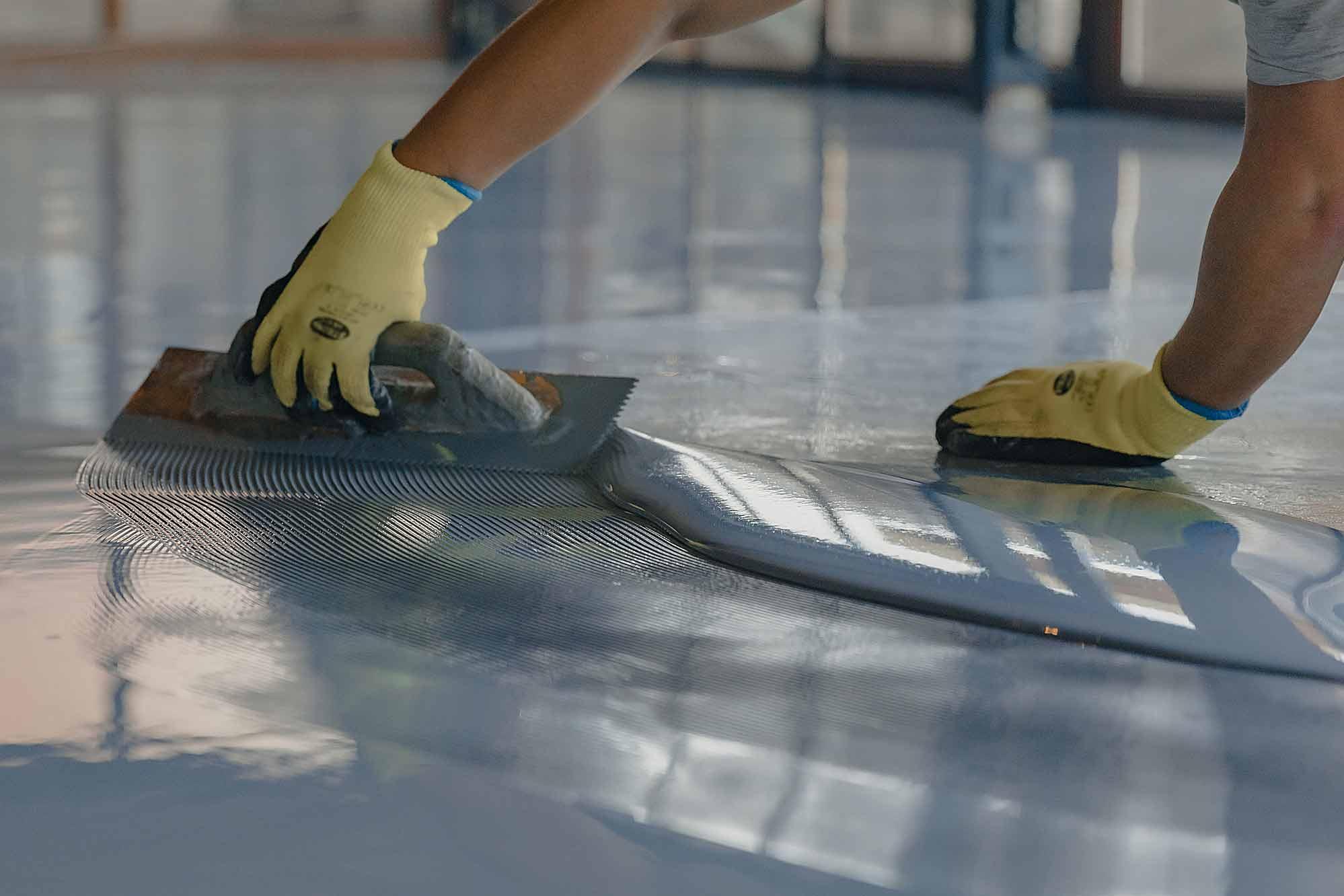
Commercial epoxy flooring systems rely on chemical reactions between components. Correct ratios, thorough mixing, appropriate application thickness, and proper timing all matter.
Improperly mixed materials may cure unevenly or fail to achieve their intended strength. Applying the coating too thick or too thin can also affect performance. Even environmental conditions such as temperature and humidity may influence the installation process.
Professional installation helps ensure the manufacturer’s requirements are followed throughout the project. At Creative Maintenance Solutions, we match the flooring system and installation process to the conditions of the facility rather than treating every application the same way.
5. Not Allowing Enough Time for Proper Curing
A Floor Isn’t Finished Just Because It Looks Dry
One of the easiest mistakes to make is assuming an epoxy floor is ready for use as soon as the surface feels dry. Epoxy needs sufficient curing time to develop the properties required for long-term performance.
Putting the floor back into service prematurely can damage the coating before it has achieved the necessary strength. Heavy equipment, carts, forklifts, or aggressive cleaning can be particularly problematic during this period.
We provide clients with clear guidance about when their new floor can handle foot traffic and when normal operations can safely resume. Following these recommendations helps prevent avoidable epoxy floor coating problems immediately after installation.
6. Allowing Heavy Traffic Too Soon
Industrial Traffic Places Significant Stress on New Floors
Even after limited foot traffic is permitted, that doesn’t necessarily mean a newly coated floor is ready for everything a manufacturing or warehouse environment can throw at it.
Forklifts, pallet jacks, machinery, and heavy stationary loads place significantly more stress on a coating than pedestrians. Returning these loads to the floor before the system has sufficiently cured can leave marks or contribute to premature deterioration.
Planning around curing requirements is therefore an important part of a successful project. We work with facility managers to coordinate installation schedules and minimize operational disruption without sacrificing the quality of the finished floor.
7. Choosing the Wrong Flooring System for the Environment
Not Every Facility Needs the Same Coating
Sometimes an apparent epoxy failure begins with choosing a flooring system that wasn’t appropriate for the facility’s conditions. Standard epoxy can perform exceptionally well in many commercial and industrial applications, but environments involving significant thermal shock, aggressive chemicals, frequent hot washdowns, or other extreme conditions may require a different system.
For example, urethane cement may be better suited to certain food processing and demanding industrial environments. Other spaces may benefit from flake systems or polished concrete.
Our role at Creative Maintenance Solutions is to understand how the facility operates before recommending a system. Choosing the correct material from the beginning can prevent premature deterioration and provide a much better long-term return.
Prevent Epoxy Floor Failure with Professional Installation
Preparation and Planning Make the Difference
Many causes of epoxy floor failure can be prevented before the first coating is applied. Thorough substrate evaluation, professional surface preparation, moisture management, correct application, sufficient curing time, and selecting a system suited to the environment all contribute to long-term performance.
Commercial epoxy flooring should be viewed as a complete system rather than simply a coating applied over concrete. Every stage of the process affects how that system performs over time.
At Creative Maintenance Solutions, we take the time to evaluate each facility and prepare the substrate properly before installation begins. Whether you’re considering a new commercial epoxy flooring system or experiencing problems with an existing floor, our team can help determine the best path forward.
Contact Creative Maintenance Solutions today to discuss your facility’s flooring needs and learn how professional installation can help prevent common epoxy floor coating problems while delivering a safer, stronger, and longer-lasting surface.